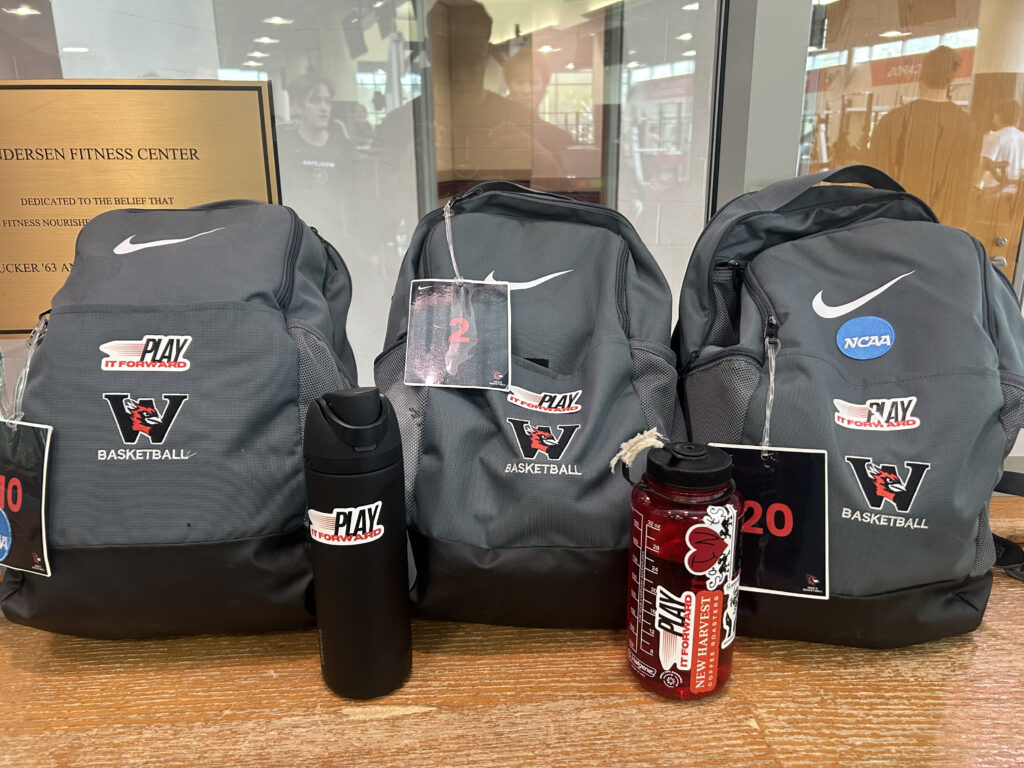


Play It Forward taught me that sustainable impact is not created through one event, but through building
systems that allow communities to support, collaborate, and motivate one another. I learned that
meaningful civic engagement requires accountability, trust, and communication. Play It Forward has
shown me that real change is possible when we create solutions that outlast us.
– Macie Carlos, Class of 2027
The Student Innovation Fund generously covered the operational expenses of Play It Forward’s Spring 2026 Donation Cycle. These covered transportation costs for moving items, shoe-cleaning and disinfectant supplies, printing posters and signage costs, shoelaces, and catering for the shoe cleaning event.
Play It Forward is a student-led program in collaboration with Wesleyan Athletics and the
Sustainability Office that redistributes gently used athletic shoes and apparel to expand equitable access
to sport while reducing textile waste. By connecting surplus athletic gear with community need in
Middletown, the program aims to foster sustainability, equity, and stronger university-community
partnerships.
As a student-athlete, I noticed that approximately 800 student-athletes cycled through athletic
shoes and gear every semester, often discarding items that are still functional. There was an absence of a
structured system to collect these items, which creates waste and missed opportunities for reuse. As an
Environmental Fellow, I noticed that at the same time, many Middletown residents face persistent barriers
to accessing basic athletic clothing and footwear, which limits participation in sports and physical activity
due to high costs and lack of availability. I also experienced firsthand how two communities that were
central to my life did not collaborate. My teammates rarely engaged in sustainable initiatives, and my
co-fellows rarely interacted with varsity athletics.
I established Play It Forward as a circular economy that transforms athletic surplus into sustained
community access. Through the connections from Wesleyan Athletics, the Sustainability Office, and
Middletown partners, I built a structured system that empowers student-athletes to practice sustainable
gear redistribution while meaningfully engaging in community impact.
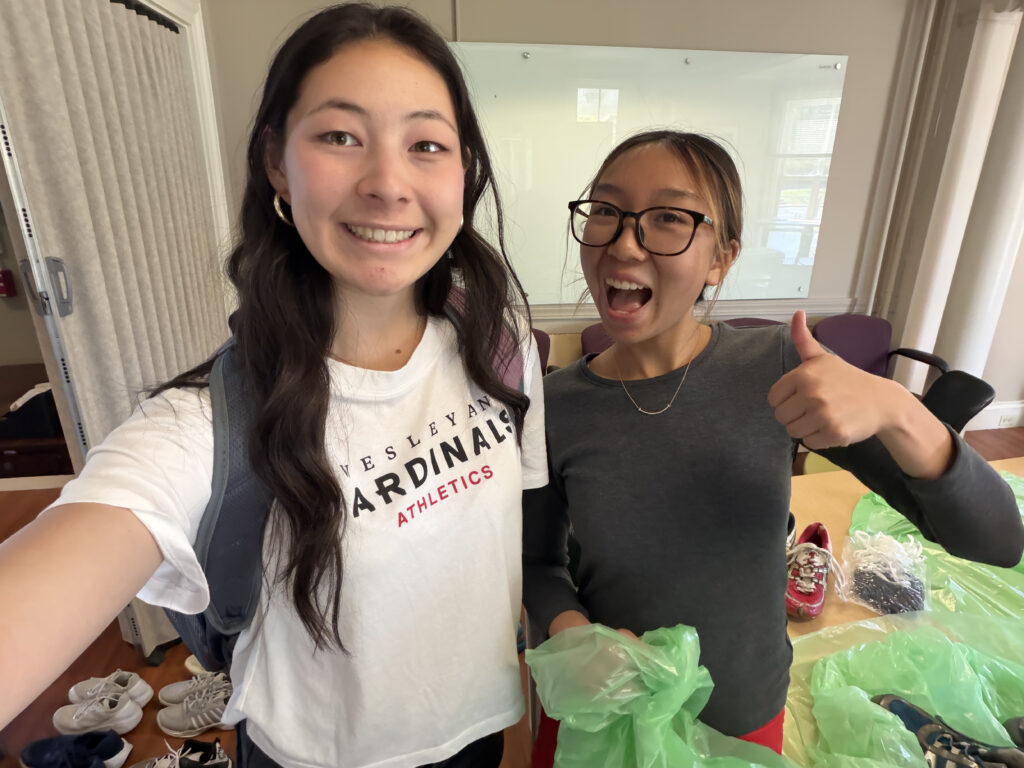
Play It Forward operates on a semesterly basis, otherwise known as a donation cycle. Five donation
bins are placed across campus, including the Freeman Athletic Center, WesThrift, and the Office of
Human Resources to make responsible gear disposal accessible to both students and faculty. These bins
are regularly monitored, emptied, and stored at the Bailey College of the Environment. Towards the
end of the semester, we hold a shoe cleaning event to screen and sanitize shoes to ensure they are still
reusable, and to protect the dignity of its recipients. We have donation guidelines, and those that do not
meet the criteria are properly disposed of.
The shoes and clothes are then donated to Middletown Police Activities League and Middletown
Recreation Center as redistribution partners. To build meaningful and connected relationships, I regularly
visit partner sites, meet directly with community leaders, and discuss their specific needs before and after
each redistribution cycle. I also work with Sustainable CT so that Play It Forward contributes to
Middletown’s municipal sustainability certification.
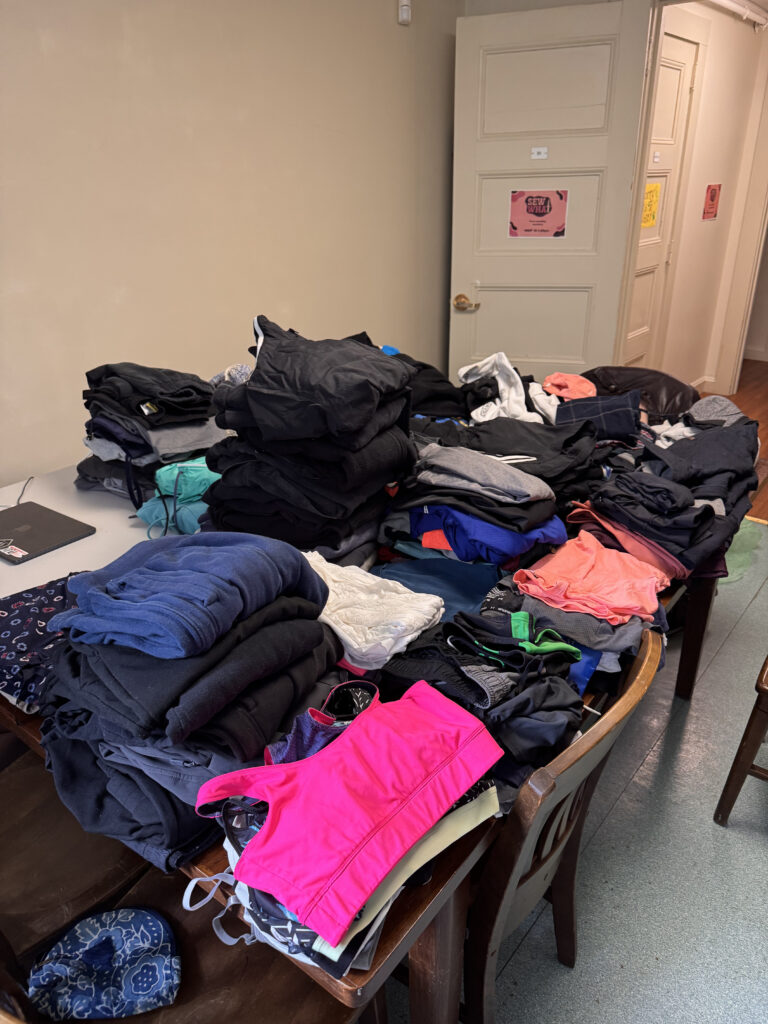
This Spring 2026 Donation cycle is the 2nd donation cycle in operation. Through the Student
Innovation Fund, I connected with Harmony Hoogs, a fellow recipient, who focused on improving access
to dance clothes and supplies in Middletown. With Play It Forward infrastructure already established, we
set up a 6th bin at the Dance Department to collect dance clothes and supplies, and partnered with
Ekklesia Ballet as a redistribution partner.
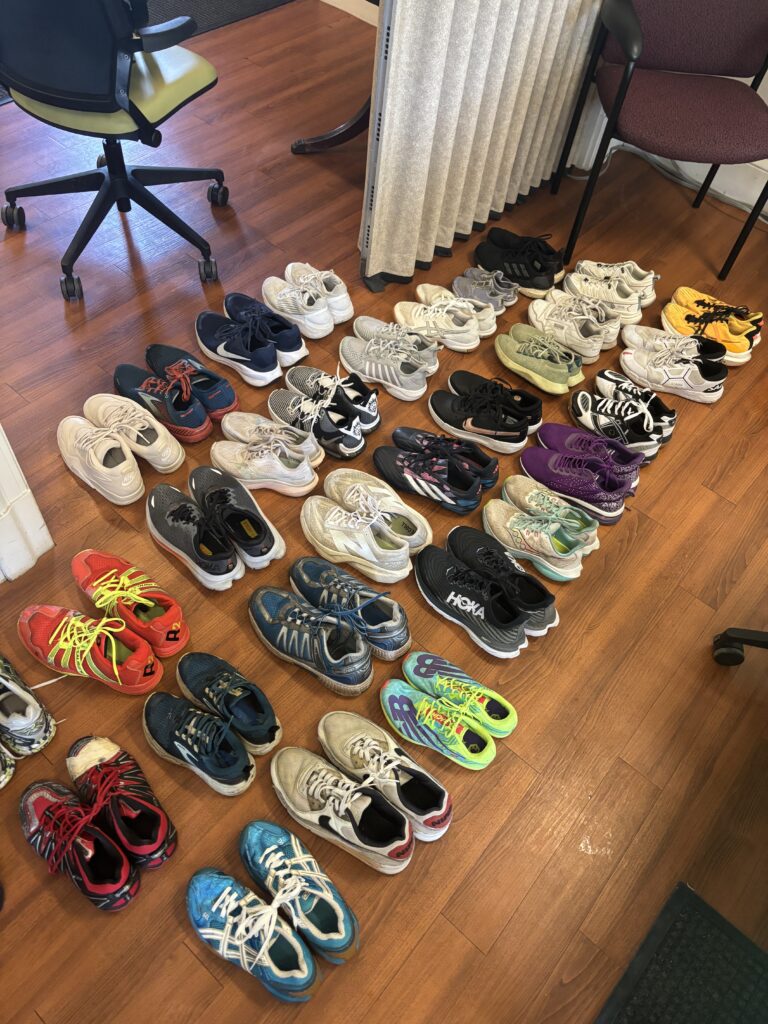
During the first week of May 2026, we screened and sanitized 34 pairs of athletic shoes and 151
pieces of athletic apparel. An additional 24 non-athletic clothing items were collected and redirected to
WesThrift to ensure they remained in circulation within the campus reuse system. Moreover, 6 pairs of
shoes were salvaged by replacing broken or missing shoelaces.
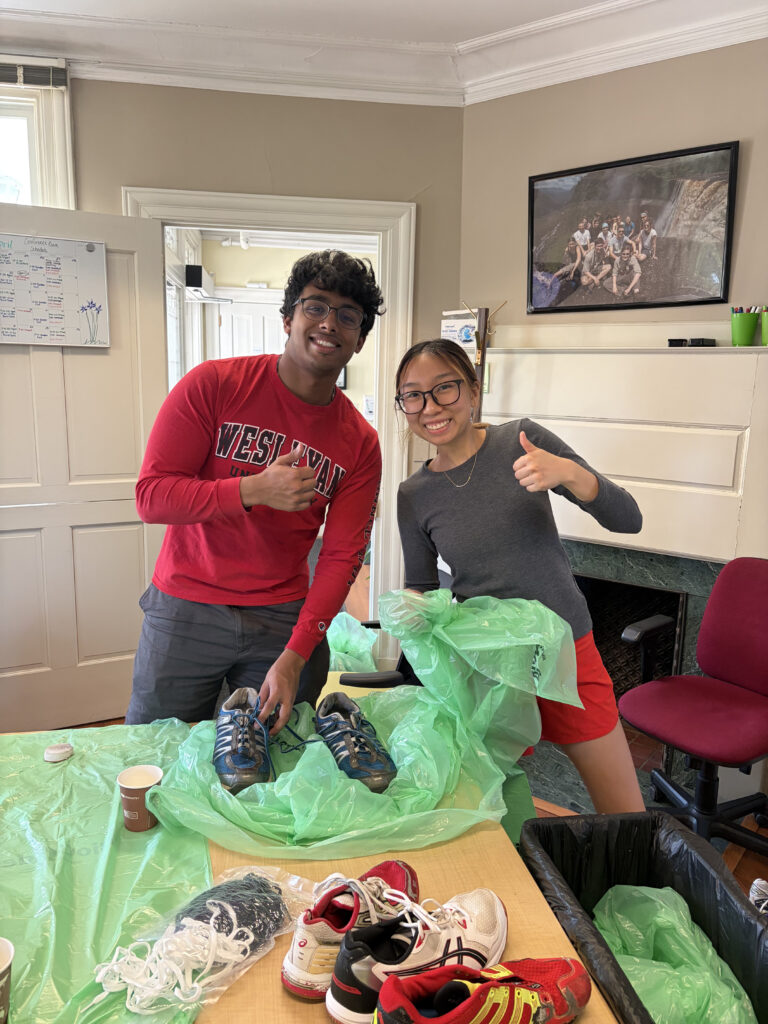
This was made possible by the support of 12 student volunteers who monitored bins, served as
Team Ambassadors within their athletic teams, and participated in the end-of-semester shoe cleaning
event. Play It Forward also collaborated with 10 campus organizations including the Student-Athlete
Advisory Committee, Jewett Center for Community Partnerships, the Sustainability Advisory Group for
Environmental Stewardship (SAGES), and WesThrift (the university’s free clothes store). These
partnerships spread awareness and encouraged participation across campus. Play It Forward will redistribute the shoes and athletic apparel to the three redistribution partners
on May 12, 2026.
Play It Forward taught me something I hadn’t fully realized when I started: the operational work
matters, but the deeper work lies in how I engage, support, motivate, and collaborate with others. While I
built a sustainable system to improve access to sports, the most important part of my civic engagement
work is motivating people to care, and understanding what the communities I partner with need.
Play It Forward contributes to two focuses of the Student Innovation Fund. First, Play It Forward
enhances collaboration – it aims to build bridges between Sustainability and Athletics, Wesleyan
University and Middletown, and university students and groups.
Second, Play It Forward investigates impact. Since Play It Forward addresses multiple problems,
impact at the end of a donation cycle is measured through four main results. Quantitatively, I measure the
number of shoes and clothes donated to Middletown Community partners, and estimated weight diverted from landfill. Qualitatively, I seek verbal or written feedback from community leaders after each donation cycle. Impact on access to sports is measured if the donations received fulfill the needs of individuals, and willingness to continue collaboration indicates sustained relationship trust. I also maintain an open feedback form for anyone to access on Play It Forward’s social media.
This project shifted the way I think about change and social impact. I now see that meaningful
impact like what the Student Innovation Fund has enabled me to do depends on the creating structures
and models that last beyond my involvement. Rather than focusing solely on immediate outcomes like
one donation cycle, I am more attentive to how initiatives can be institutionalized and strengthened over
time.